Medicare and Telehealth
Posted: September 04, 2025
Tips to Keeping Virtual Visits Safe
Telehealth (also called telemedicine or Teledoc) lets you have medical appointments and health services through live video and audio. It can be a safe, convenient way to get the care you need, from the convenience of your home. Unfortunately, some scammers are using telehealth to try to steal personal information or trick Medicare into paying for services you don’t need. Knowing the warning signs can help protect you and your benefits.
Watch Out for These Red Flags
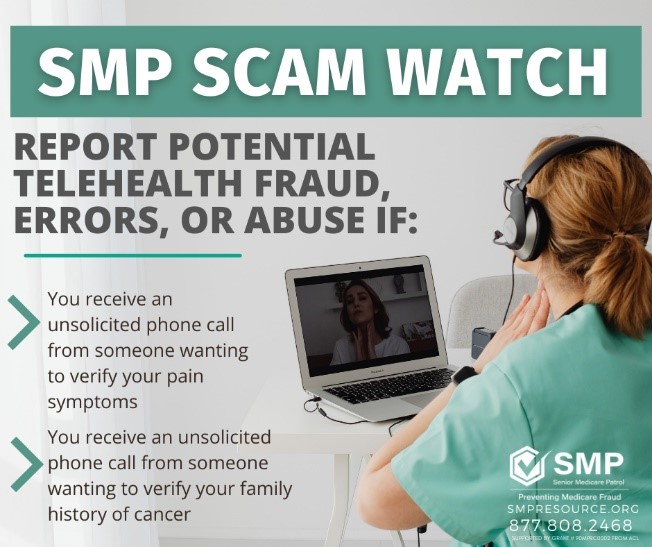
- Someone calls asking if you have pain or family medical history. They may be trying to send you medical supplies or a genetic test you don’t need.
- You get transferred to another person who says they can “get you approved”. They may be trying to get you to agree to something you don’t need or may not qualify for.
- You’re asked or pressured to agree to a test or procedure that would require an in person visit.
Family Members & Caregivers, Be on the Lookout For:
- Your loved one gets a call from a stranger asking for personal or information.
- They have a telehealth visit with a doctor they’ve never met.
- Their Medicare Summary Notice shows charges for services or doctors they don’t recognize.
Telehealth can be a convenient service for taking care of your medical needs virtually. By being proactive and knowing the warning signs to look for, you can feel confident that your Telehealth appointments are working for you. If you think something doesn’t feel right, report it to the Missouri SMP by calling 1-888-515-6565.
The Missouri SMP is here to provide you with information you need to protect, detect, and report potential Medicare fraud, errors, and abuse. If you think you or a loved one has been a target of a Medicare scam, call the Missouri SMP at 888-515-6565.
This project was supported, in part, by the U.S. Administration for Community Living (ACL), U.S. Department of Health and Human Services (HHS) as part of a financial assistance award totaling $638,014 with 100 percent funding by ACL/HHS. The contents are those of the author and do not necessarily represent the official views of, nor an endorsement by, ACL/HHS, or the U.S. Government